Shalom: Far More Than Peace
We translate it as 'peace,' but the Hebrew word Shalom carries the weight of wholeness, completeness, and a world restored to its intended order. Understanding this word changes how we read every blessing in Scripture.
When we say Shalom (שָׁלוֹם), we are not simply wishing someone an absence of conflict. We are speaking a word that carries the weight of an entire theology.
The Root: Shalem
Shalom comes from the root shalem (שָׁלֵם), which means complete, whole, intact, at peace with itself. A broken vessel is not shalem. A fractured relationship is not shalem. A person torn between two loyalties is not shalem.
Shalom, then, is the state of being fully what you were created to be — nothing missing, nothing broken, nothing out of place.
Shalom as Covenant Language
In the ancient Near East, covenants were often described as shalom — a state of mutual wholeness and right relationship between two parties. When God promises shalom to Israel, He is not promising a quiet life. He is promising restored covenant relationship — a world where every part functions as it was designed.
"I will make a covenant of peace (*brit shalom*) with them; it will be an everlasting covenant." — Ezekiel 37:26
The Menorah and Shalom
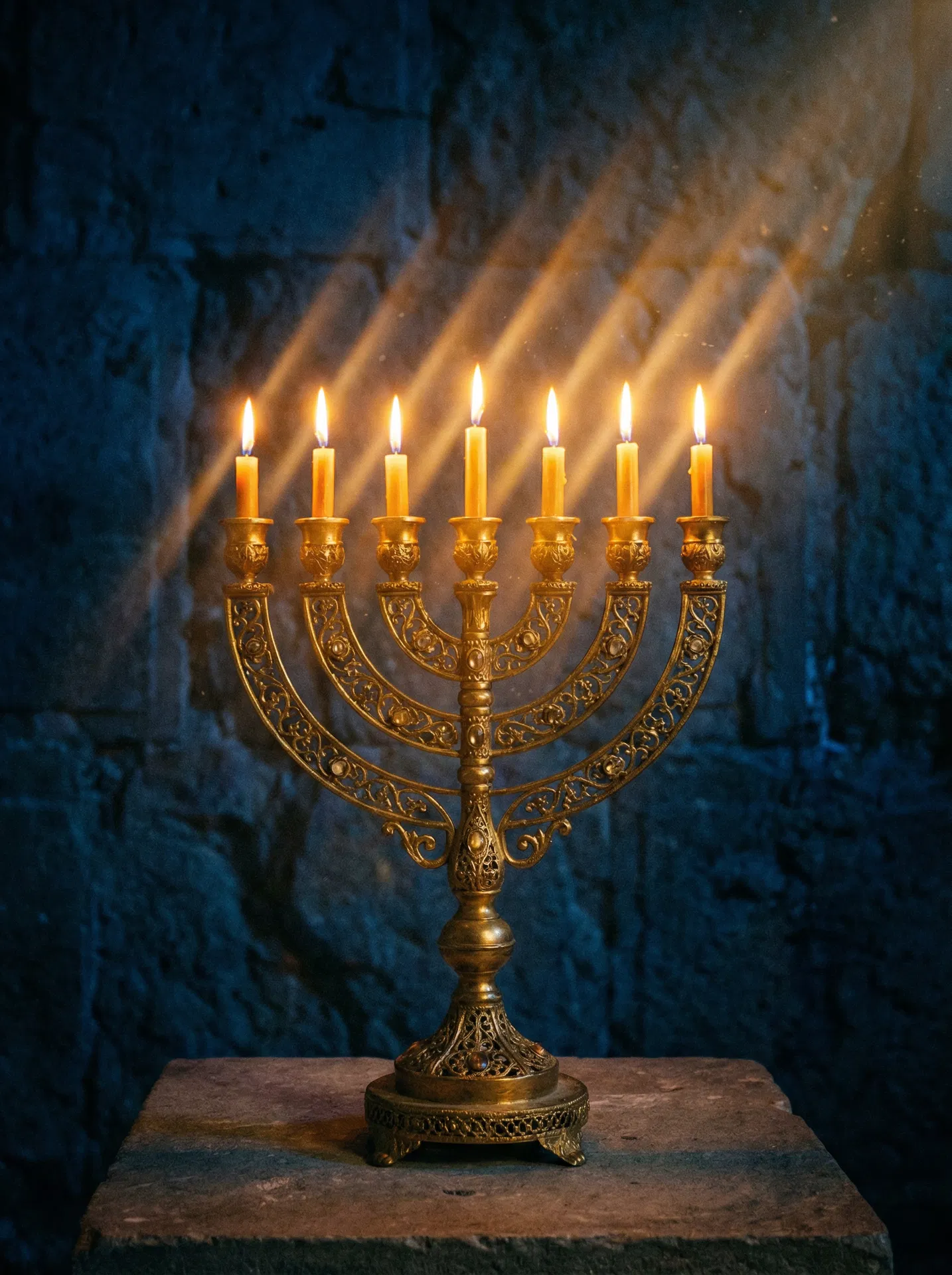
The seven-branched menorah in the Tabernacle was designed to give light in all directions — not just forward. This is a picture of shalom: light that reaches every corner, leaving no shadow unaddressed. The wholeness of shalom is not partial. It is complete illumination.
When Yeshua said "Peace I leave with you; my peace I give you" (John 14:27), His Hebrew-speaking audience would have heard something far richer than a feeling of calm. They would have heard a covenant declaration: I am restoring you to wholeness. I am making you shalem.
This is the shalom that passes understanding — not because it is mysterious, but because it is so complete that our broken minds cannot fully contain it.
Found this meaningful? Share it with someone.